· Timothy O'Brien
The Tone Under the Words
Voice feedback carries the emotion your keyboard flattens, and systems that react to it are the undiscovered country.
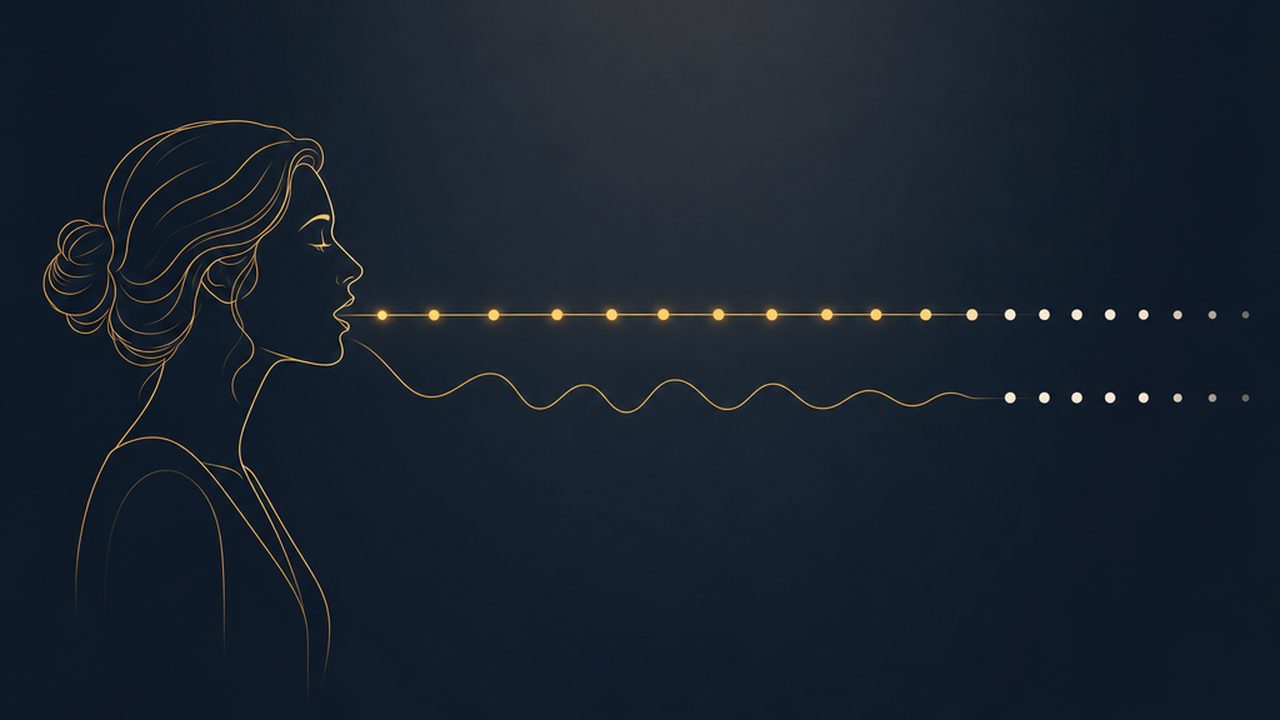
Voice carries a second channel that text doesn’t: the tone underneath the words. You can hear whether someone is rushed, angry, or quietly dissatisfied. A keyboard flattens all of it. Every transcription layer I use today captures the words and throws the tone away. The systems that learn to read it are the undiscovered country.
The input modes we use with computers keep evolving. For most of the history of software you typed, and that was the whole deal. Now voice does things that used to take typing. You can dictate an idea for a system instead of writing it up. You can give a system feedback by talking to it. Usually the system has to be trained first — it needs your credentials, some context about what you’re working on — but once that’s set up, talking is a real input mode. I get far more done speaking than I do typing, and I’ve written before about how much of my day runs through dictation.
The ironic part is writing. Whenever I have to write a long email or a paper, I never start by typing. I start with a brain dump. I talk through what I’m thinking about the topic, then I either paste in content I want to cover or ask the system to go do research and find the facts and figures before I sit down and write anything. I’m dictating this post right now, in the car. A model is turning it into a first draft.
Where this matters most is feedback. An orchestrator gives systems feedback constantly — it’s most of the job. And feedback contains emotion. You might be happy. You might be dissatisfied. You might be two sentences into a review and already getting annoyed. Typed feedback hides all of that. You can convey emotion from a keyboard, but you have to work at it, and the system receiving it still has to guess.
There’s a word for the part that’s missing: prosody. Prosody is the emotional way you deliver words — the pitch, the pace, the strain in your voice. Modern transcription can capture it. The transcript stops being just “fix the auth bug” and starts being “fix the auth bug,” delivered flat and fast, the third time you’ve said it this week. Those cues are useful, especially when you’re writing, and they’re what actually distinguishes spoken feedback from typed feedback.
You can see the workarounds people use when they type. Exclamation points. “lol.” The word “gently” before a criticism. All of that is hand-built emotion — a rough approximation of tone the reader has to decode. Speaking skips the encoding step entirely.
This is a new level of input. Everything we’ve built so far treats voice as transcription — speech in, text out, the same artifact you’d have gotten from a keyboard, just faster. Prosody makes voice more than that. It’s an input mode that carries the state of the person talking, not just the content of what they said.
The reason I connect this to orchestration is that a system which hears prosody doesn’t just help you create content. It reacts. Think about email. A system that reads your email can already summarize it. A system that hears which emails are stressing you out — hears your voice get tight as you read one — knows something no text analysis will ever show it, and it can respond: slow down, reorder the inbox, talk you down before you answer the one you’re going to regret.
The same thing goes for the agents I give feedback to. Today a frustrated “no, again” and a calm “no, again” are identical strings to the system. They shouldn’t be. A system that can tell the difference knows to stop, ask what it got wrong, and change its approach instead of pushing the same answer at you a fourth time. That’s the system I want to work with.
None of this exists yet in any real form. The transcription layer is here and it’s good. The reactions aren’t. The first platform that captures prosody alongside the transcript, and hands it to the system that has to act on the feedback, will change what it means to talk to a machine. Until then I’ll keep dictating in the car — the words are already there, and the tone is the part nobody has captured yet.
Newsletter
Get the notes by email
New essays and chapter updates, a few times a month. No spam — unsubscribe any time.