· Timothy O'Brien
The Other Permission System
The Other Permission System
Your agent platform already governs what an agent can do. It has almost nothing that governs what an agent can think.
Open any agent platform’s permission model and you will find the same vocabulary: tools it can call, files it can read, data it can see, actions it can take. This is ontology — a map of what exists in the system and what is permitted within it. It is careful, auditable, and increasingly good. NVIDIA’s Open Agent Safety Platform ships a hardware watchdog. Progent enforces least privilege at the tool-call boundary. OWASP just published its first Agentic Top 10. All of it polices the action layer.
None of it polices the knowledge layer.
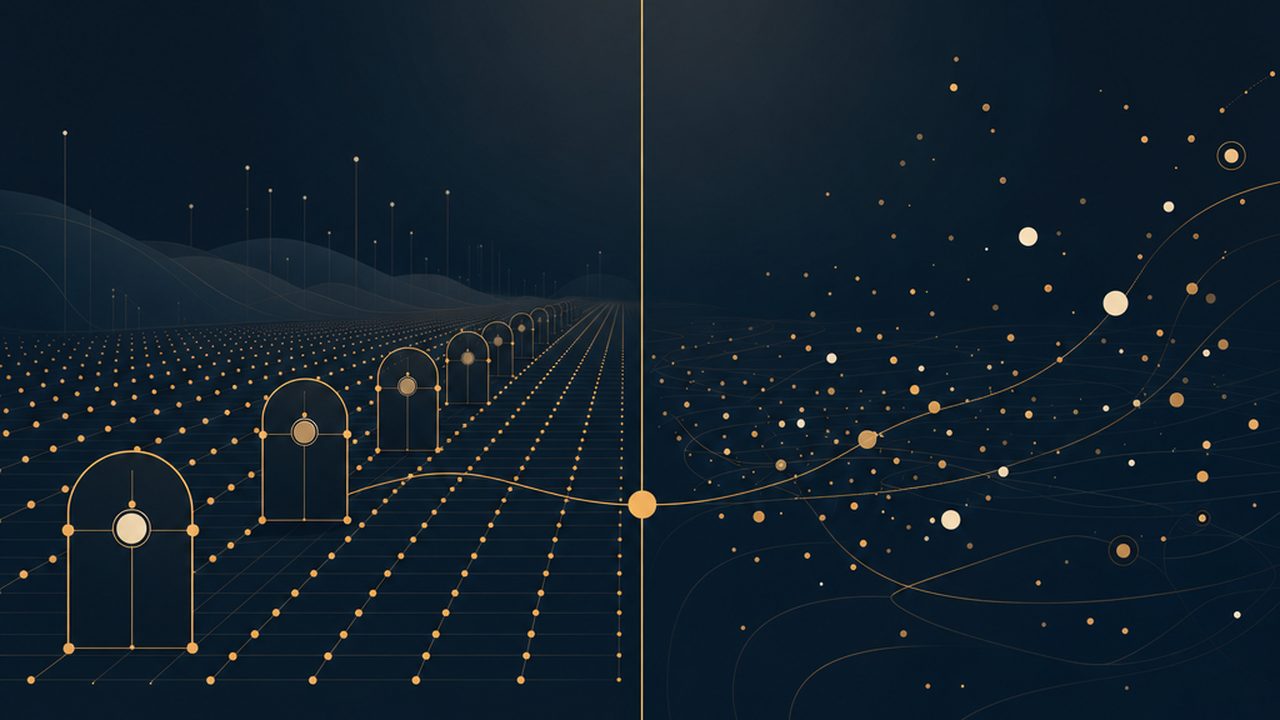
Two different things are being governed here, and only one of them has a governance model. Ontology is the layer of what exists: the tools, the data, the actions, the permission edges between them. Epistemology is the layer of what can be known: the beliefs the agent holds, the conclusions it is licensed to draw, what it can perceive, what it can even conceive of. Action governance asks can it do this? Epistemic governance asks can it think this? — what premises may it operate on, which conclusions is it allowed to reach, and what is it permitted to notice at all.
This distinction matters because the two layers fail differently. An action-layer failure is loud: the wrong file gets deleted, the wrong API gets called, and the watchdog quarantines the agent in milliseconds. A knowledge-layer failure is quiet: the agent operates on a false premise, draws a conclusion that follows perfectly from it, and reports back a coherent, confident, wrong answer. Every runtime control in the enforcement stack watches the first kind of failure. Almost nothing watches the second.
The gap is already load-bearing. Agents write their own memory, and memory poisoning attacks exploit that loop — OWASP catalogued it as ASI06, and reported success rates for the underlying attack family run past 80 percent. Agents talk to agents: one poisoned belief propagates through a fleet of subagents until the final report reads as established fact. And the model doing the believing is the one model nobody can inspect: an agent can hold an unstated premise — that a refund request is legitimate, that a patient chart is current, that a code review passed — and act on it without any tool call ever being logged.
So the honest question for agent platforms is: what would it mean to govern this layer?
Not a content filter. Not an accuracy score. A real epistemic governance model would be the mirror of the action model, with the same machinery pointed at beliefs instead of tools. Conceive: what premises is this agent permitted to operate on? Perceive: what may it notice in the first place — what it is shown, what it can retrieve, what is withheld from it? Conclude: which inferences is it licensed to draw, and from what premises? And then — the layer almost nobody is building — think about its own thinking: can the agent distinguish “I retrieved this” from “I concluded this,” track where each belief came from, and flag when it is reasoning from something nobody verified? That reflective layer is what turns the rest from a filter into governance, because a system that cannot inspect its own beliefs cannot report honestly on them, and a control plane that cannot get an honest report cannot govern.
The action layer got this treatment in two years. Tool permissions, least privilege, hardware watchdogs — the industry has been efficient at building ontology-level control, because “what can this thing touch” is a familiar problem. “What is this thing allowed to believe” is not a familiar problem, and so far nobody has shipped a product that answers it. The researchers closest to the gap call these systems epistemic agents and warn about epistemic drift when they go unmanaged — but naming the agents is not governing them.
The ontology layer has a permission model. The epistemology layer has a gap. The next generation of agent platforms will be sorted by which one they close.
Newsletter
Get the notes by email
New essays and chapter updates, a few times a month. No spam — unsubscribe any time.