· Timothy O'Brien
Fable 5.2 and the Efficiency of Multi-Model Workflows
The model numbers are good - 30% faster, 20% cheaper, under GPT-6 Astra. The game changers are Advisor and Orchestrator: dynamic model selection that cuts the waste out of multi-model workflows.
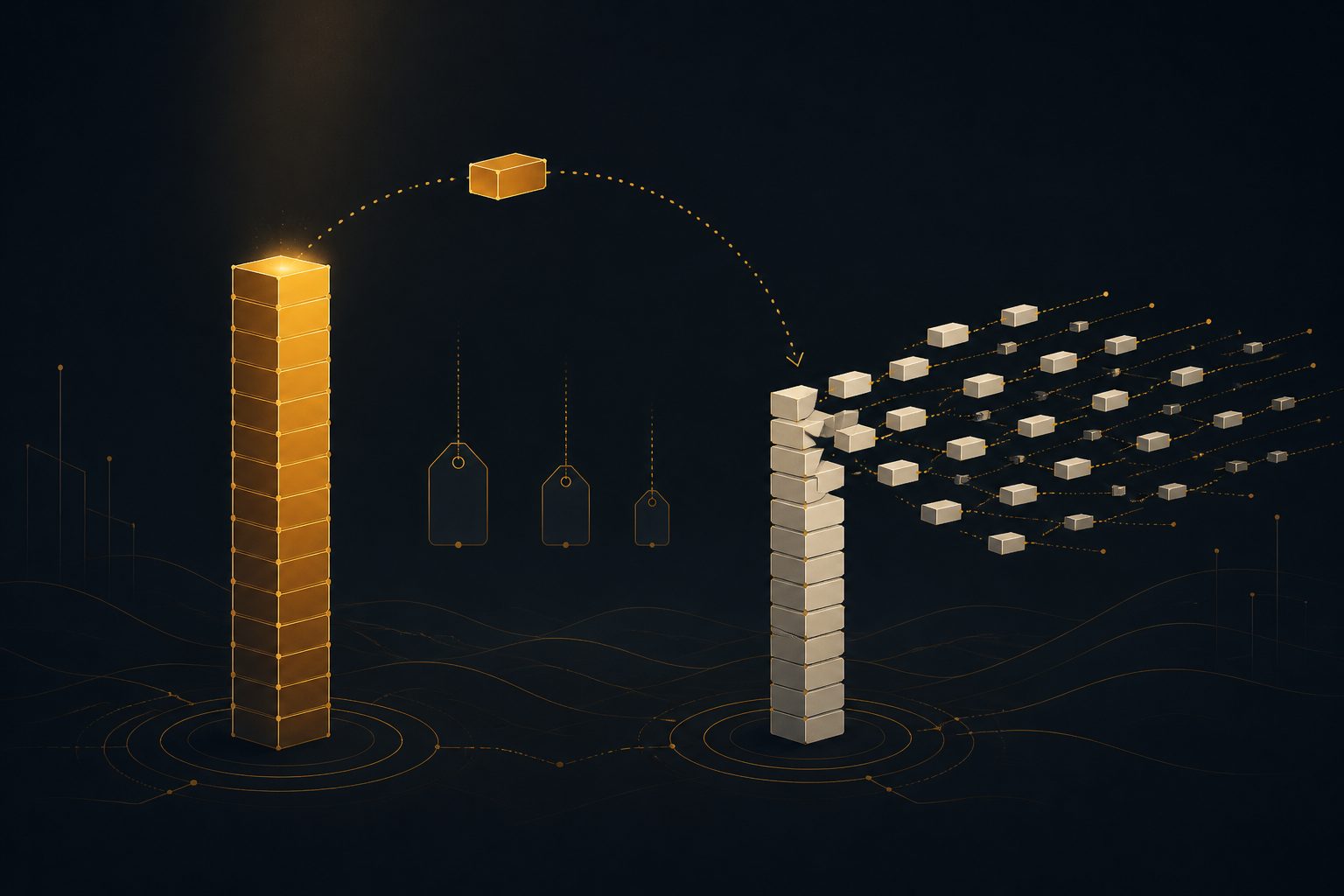
The model announcement is impressive: Claude Fable 5.2 and Mythos 5.2 launched Monday, November 9, 30% faster than their predecessors and 20% cheaper the day they shipped — a price that undercuts GPT-6 Astra. But the game changer is not on the benchmark table. It is the two roles the model plays in a multi-model system: Advisor and Orchestrator — capabilities that shipped earlier this year and, with a cheaper flagship at the top of the stack, turn intelligent multi-model workflows into the efficient way to run hard problems.
Fable 5.2 and Mythos 5.2 are the same underlying model; Fable carries stronger cybersecurity and biology safeguards so anyone can use it, while Mythos stays restricted to organizations in Anthropic’s Cyber and Life Sciences verification programs. Both run faster than their 5.1 predecessors, and a new Fast mode speeds token generation up to 2.5 times in Claude Code, the Claude Platform, Google Cloud, and Microsoft Foundry.
The price, and the fine print on it
Standard pricing dropped from $10/$50 per million input/output tokens to $8/$40, putting Anthropic 20% under OpenAI’s GPT-6 Astra. Fast mode costs $16/$80, exactly twice standard: you pay double for the faster pipe, not a mystery surcharge.
Is a cut on an expensive model worth celebrating? Fable 5.2 still lists at twice Opus 5.5 — $8/$40 is not cheap, and Anthropic still recommends Opus 5.5 as the daily driver. But the cut moves the flagship from hypothetical to usable. Anthropic claims the economics work: in early FrontierCode 2.0 testing, Fable 5.2 at High effort performed about as well as Opus 5.5 at Max effort for roughly half the cost per task. At Xhigh effort it scored 49.1%, the highest of any released model the company has tested.
The scoreboard, with the losses left in
On agentic coding, Fable 5.2 scored 49.1% on FrontierCode 2.0 against 32.4% for Fable 5.1, 45.5% for Opus 5.5, and 42.8% for GPT-6 Astra. The announcement is not a clean sweep, and the losses are visible: Gemini 4 Carbon leads on AutomationBench at 53.9% versus Fable’s 51.4%, and Opus 5.5 still holds a small Elo edge on AA-Briefcase, the knowledge-work evaluation. The full methodology lives in the system card.
The two roles to pay attention to
The production release to pay attention to is the one Anthropic named in the announcement: Fable 5.2 as an Advisor that smaller models consult on hard problems, and as an Orchestrator that delegates simpler tasks to cheaper ones. A fact check, because it matters: neither role is new with 5.2. Advisor shipped in beta on the Claude Platform on April 9, 2026, pairing Opus with Sonnet or Haiku as the executor. Multiagent orchestration arrived with Claude Managed Agents in May, and Dynamic Workflows — a program that runs up to 1,000 agents in phases — hit public beta on October 9. What is new is the top of the stack getting cheaper and faster at exactly the moment the routing plumbing under it matured.
I know what the alternative costs, because I paid it. Before this plumbing existed, I spent $1,800 on a single Claude Ultracode Opus 5.5 session — one long-running problem, one premium model, no dynamic model selection to push the mechanical work down to cheaper models. The session earned its result, and it is not a pattern anyone can run at volume. Advisor and Orchestrator are what make the workflow efficient: the flagship spends its expensive tokens only where judgment is needed, and everything routine flows down to cheaper models.
If you have been making real use of frontier models, you are already jumping between them — Haiku for the mechanical work, Opus for the daily driver, GPT for a second opinion, the flagship for the problem that keeps failing. Claude Code is making that much easier: model choice per task, auto mode that picks for you, and the advisor pattern one API call away. What was missing was an affordable flagship at the top, and $8/$40 changes what “just ask the big model” costs in a swarm.
Drew Breunig made the cross-model case at AGNTCon two weeks ago (write-up with slides): after a few contradictory examples sit in the history, Gemma 3 12B follows its instructions less than half the time, and Opus 4.6 fails too — just on a much longer fuse. Every model decays, at a different rate. His advice cuts straight to cost: bigger models, think harder, or improve your context — one of those is cheap and fast. That is the orchestration structure: routine work down the stack, expensive tokens only where judgment is needed, each worker’s context kept clean.
The demos carry their own caveats: the 1,000-agent formalization of Fermat’s Last Theorem in Lean took 30 hours — formalization, not discovery, on a single run per model. What is proven: a cheaper, faster flagship with its benchmark losses disclosed, and an orchestration stack mature enough to route work across models. What is not proven: whether the cost-per-task claim survives independent testing, or whether the price cut sticks — Anthropic is running launch offers through November 16, and price cuts announced the week before an IPO deserve a second look at the renewal date.
If you enjoyed this, my book Orchestrator: Your Next Job Title is about exactly this shift — what the work looks like when a model coordinates the models. Read it free at readorchestrator.com, or grab the Kindle or paperback.
Newsletter
Get the notes by email
New essays and chapter updates, a few times a month. No spam — unsubscribe any time.